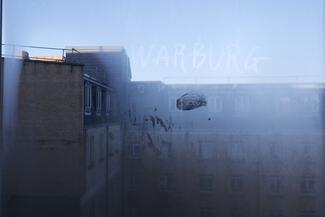
The Unfitting of Things Group Exhibition
Dates : Mardi 16 décembre 2025 - Vendredi 14 février 2025
Vernissage : Vernissage mar 16 déc 2025, 18:00
Adresse : Pórtico Gallery, Travessa Dona Paula, 116 – Higienópolis, São Paulo, 01239-050 São Paulo
Pórtico Gallery
Travessa Dona Paula, 116 – Higienópolis, São Paulo
São Paulo-SP
01239-050
Brésil
Description, horaires...
São Paulo welcomes a new multidisciplinary space dedicated to contemporary art: the Pórtico Gallery. Founded by curator and critic Adolfo Caboclo alongside his partner Alexandre Zákia, the space is set to open its doors on December 16, 2025, with the group show O desencaixar das coisas (The Unfitting of Things). Situated in the charming village of houses on Travessa Dona Paula—a hub of galleries, artist residencies, and cultural spaces in the heart of the Higienópolis neighborhood—the gallery arrives to reshape the city's art scene.
Pórtico is born with a commitment to rethink the role of a contemporary art gallery, operating as a laboratory for artistic practices, a space for research, and a platform for the circulation of ideas. "We aim to offer the public a dynamic space for critical thinking about contemporary art, uniting research, educational activities, artistic training, and market development," states Adolfo Caboclo, Artistic Director of Pórtico.
Travessa Dona Paula was chosen for its consolidation as one of the main meeting points for visual arts in São Paulo. There, the gallery will stand alongside important cultural spaces in the neighborhood, such as A Gentil Carioca, the moraes-barbosa collection, Zielinsky, Sardenberg, ateliê397, the Ybytu artistic residency, the recently inaugurated casa onze (a space dedicated to an international residency program), and the publishing houses Celeste and Piscina Pública Edições.
Exposed brick and natural light
Conceived by Noura van Dijk | Interior Design, the architectural project transformed the 100 square meters of the property into a versatile space that houses exhibition rooms, a small technical reserve, and storage.
Preserving the urban refuge of Travessa Dona Paula and the cluster of townhouses listed by the Municipal Council for the Preservation of Historical, Cultural, and Environmental Heritage of São Paulo (Conpresp), the design blends the charm of the original exposed brick facade with the neutrality of a "white canvas," ready to receive visual narratives.
To achieve this atmosphere, some internal walls were removed, enhancing circulation and creating more areas for exhibition proposals. The central patio was integrated and gained a retractable aluminum-slat roof, which controls light and ventilation, functioning as an extension of the galleries. The lightened polished concrete floor, in dialogue with the white walls, reinforces neutrality, allowing the artworks to take center stage. The space under the stairs was utilized with functional solutions, such as storage and canvas racks, ensuring organization and expanding the collection's archive capacity.
The power of the word: a visual identity reflecting the gallery's pillars
The visual identity, created by designer Tamires Mazzo, reflects the gallery's values: being a point of passage, meeting, and structure. The concept evokes the idea of a portal—a doorway to art and a link between artists, the public, and critical thought. In this sense, the logo was designed off the conventional axis, in a typographical play that subverts order. Expressive colors and vibrant graphics sustain a visual narrative that expands throughout the identity system, not limited to the symbol itself.
Inaugural exhibition: O desencaixar das coisas (The Unfitting of Things)
O desencaixar das coisas is Pórtico's inaugural exhibition, presenting works by 16 artists. With a selection that includes emerging and established names from distinct generations and geographies, the exhibition serves as a prelude to the gallery's series of exhibitions and programming for the 2026 cycle, reflecting the breadth of perspectives guiding the project.
The featured artists are: Angela Bassan (São Paulo, 1952), Caio Borges (São Paulo, 1974), Edson Chagas (Luanda, 1977), Gege Mbakudi (Luanda, 1999), Giovanna Mitrani (São Paulo, 1997), Hugo Barata (Lisbon, 1978), Inês Moura (Cascais, 1982), José Maçãs de Carvalho (Anadia, 1960), Laerte Ramos (São Paulo, 1978), Lilian Walker (Americana, 1994), Lucimélia Romão (Jacareí, 1988), Manoel Canada (São Paulo, 1966), Neno del Castillo (Rio de Janeiro, 1956), Omar Khouri (Pirajuí, 1948), Peter de Brito (Gastão Vidigal, 1967), and Ricardo Coelho (São Paulo, 1974).
The exhibition includes photographs by Lucimélia Romão and Angolan artist Edson Chagas (winner of the Golden Lion at the 2013 Venice Biennale), a video by Portuguese artist José Maçãs de Carvalho (recently exhibited at the 2025 Macau International Art Biennale), in addition to paintings, objects, and installations. The exhibition also reflects the gallery's interdisciplinarity. This aspect is manifest in the artists' trajectories, who may develop further research during the programming cycle planned for 2026.
Names such as Omar Khouri, an intersemiotic poet celebrated since the 70s, and Inês Moura, who participated in the Atlânticos exhibition presented this year at the Museu da Língua Portuguesa, are also expected to engage in curatorial and educational investigations in 2026 alongside Artistic Director Adolfo Caboclo.
In addition to creating an overview of the represented new artists' work, O desencaixar das coisas instigates a reflection on the very space it occupies, its way of reverberating and coexisting with other agents in the city and the world. This condition of "unfitting" sustains the exhibition's poetics, structured in three cores.
The first, in the main gallery room, absorbs and dialogues with fragments of installations, paintings, video, and photographs, composing visual narratives about bodies and territories. The second core is dedicated to three-dimensional poetics, hosting works that explore materiality and evoke memories of physical space. In contrast, the third moment values the lightness of paper as a medium, bringing together photographs, charcoal drawings, and intersemiotic poetry in India ink, setting up a subtle and ethereal unfolding of the exhibition.
Mise en avant de votre exposition sur la pages pilier de ONE ARTY MINUTE : Page d’accueil + page LES EXPOSITIONS + Page LES VERNISSAGES + Instagram et FB.
Nos pages reçoivent principalement des visites de professionnels et d’amateurs d’art. En activant votre Pack Boost, vous assurez la visibilité de votre exposition dès sa publication.
7 jours (pack essentiel)
Affichage illimité sur les pages majeures de One Arty auprès d’une cible composée de 100% de passionnés d’art.
15 jours (pack avantage)
Une économie de 15% pour une visibilité renforcée auprès d’un public passionné d’art.
30 jours (pack Boost total)
Une économie de 33% pour un coût de 13,3 € par jour.